

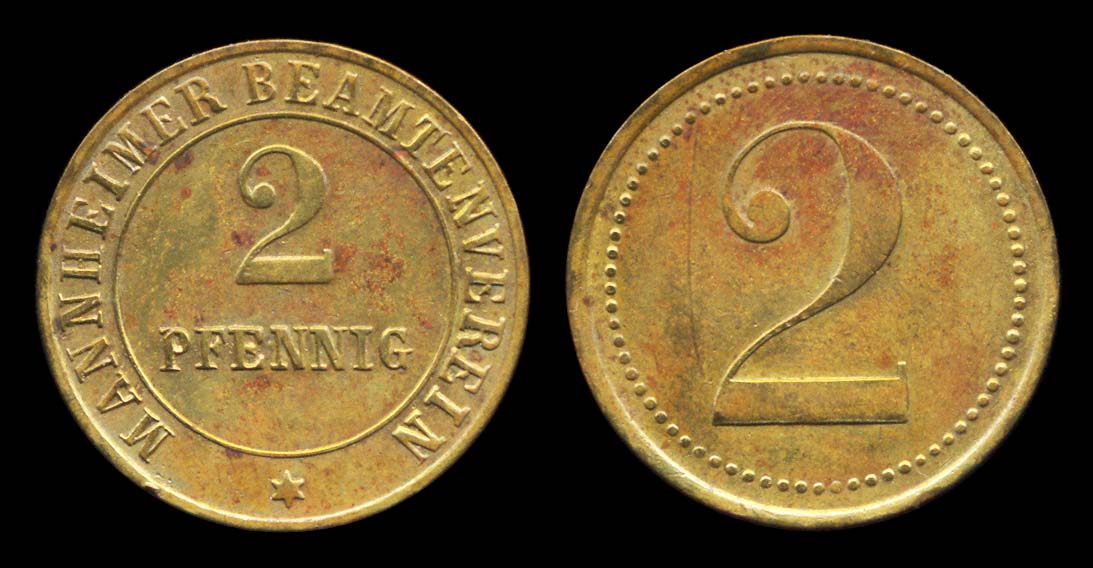
GERMANY, brass token of Mannheim, early 20th century
Order via WhatsAppDescriptionPrisoners of war were hired out for labor but they were not allowed to have real money, so they were paid in camp scrip, and there wasn’t much to buy at the canteen.The Germans have been fans of round, flat, shiny objects since the 2nd century BC, when they made imitations of Greek coins. Coin manufacture was deeply decentralized until the 19th century, extending to jetons and medals starting in the 16th century. Local tokens began to supplement the normally chaotic coinage situation in the markets from the late 17th century. Production of tokens and medals boomed in the 19th century, and was going strong into the 1990s.A token is used like a coin but is not a coin. Rather, it stands for a coin without the value of the coin. Maybe its copper, but says its value is the same as a silver coin. Usually tokens were made privately, but sometimes governments got involved.The word “exonumia” is used to describe all kinds of things that are “like” coins but are not coins. I wrote a blog post on that subject. Basic categories: 1. used like a coin but not issued by a national government, 2. looks like a coin but not made for spending, 3. other things that we are interested in.